Items
-
 NOC Preview An introduction to the features and capabilities of the computer network at 20C3. We explain how to use IPsec, IPv6 and 802.11a and 802.11b wireless networks. about this event: http://www.ccc.de/congress/2003/fahrplan/event/531.en.html
-
 Trusted or Treacherous? Mit der im November 2003 in Amsterdam veröffentlichten TCG 1.2 Spezifikation hat die Trusted Comupting Group erste Schritte in Richtung der Nutzerinteressen gemacht. Eine erste Analyse zeigte jedoch, dass für "Normal-Anwender" zentrale Probleme bestehen bleiben. about this event: http://www.ccc.de/congress/2003/fahrplan/event/542.en.html
-
 Eröffnung Eröffnung des 20. Chaos Communication Congress und organisatorische Hinweise von Nerd zu Nerd. Im Anschluß: erste öffentliche Präsentation des Dokumentationsvideos des Chaos Communication Camps. about this event: http://www.ccc.de/congress/2003/fahrplan/event/555.en.html
-
 Free WLANs for the masses The presentation "Free WLAN for the Masses" talks about the vision of creating an open network of WiFi hotspots that provide alternative mobile Internet access. about this event: http://www.ccc.de/congress/2003/fahrplan/event/576.en.html
-
 ROCK Linux - Das tool zum erstellen von (Linux) Distributionen Anlaesslich des releases 2.0 wird schoen langsam ein vortrag faellig, nachdem ROCK Linux in den letzten jahren neben OpenBSD sicherlich das groesste projekt im hackcenter war. ROCK Linux ist ein tool um Linux Distributionen zu entwickeln. Roadmap des Vortrages: - Warum braucht die Welt ROCK Linux - Wie kann man mit ROCK Linux distributionen bauen - Wie kann man ROCK Linux erweitern - Beispiel: Wie ist das modul zum builden von dietlibc basierenden distributionen implementiert - Beispiel: Wie ist das modul fuer die PowerPC architektur implementiert - Geplante integration von HURD und OpenBSD kernels - Andere geplante features fuer ROCK Linux 2.1
-
 Distributed Computing Dieser Vortrag beschäftigt sich mit dem Einsatz von "distributed computing" Projekten in den Bereichen Bildung, Forschung und Wissenschaft. Nach einer kurzen Übersicht zum allgemeinen Funktionsprinzip von "distributed computing" werden einige ausgewählte Projekte aus den Bereichen Astronomie, Proteinchemie, Molekularbiologie, Arzneimitteldesign, Meteorologie, Evolutionsforschung und Biodiversivität kurz skizziert. Als konkrete Besipiele dienen hier im einzelnen SETI@home, Folding@home/Genome@home, Distributed Folding, CommunityTSC/Find-a-Drug, Climate Prediction, Evolution@home und Lifemapper. Anschließend wird ein kurzer Überblick zu den erforderlichen Hard- und Softwarevoraussetzungen gegeben und schließlich Ziele und aktuelle Projekte der größten deutschen "distributed computing" Gemeinschaft - Rechenkraft.net - kurz vorgestellt. Ziel dieses Vortrags ist es, auf unterhaltsame Art und Weise generell ein etwas breiteres Interesse für "distributed computing" zu wecken und mehr Leute von der Nützlichkeit des "distributed computing" Prinzips zu überzeugen.
-
 Berichte von den Big Brother Awards Die BigBrotherAwards Deutschland wurden ins Leben gerufen, um die öffentliche Diskussion um Privatsphäre und Datenschutz zu fördern - sie sollen missbräuchlichen Umgang mit Technik und Informationen zeigen. Seit 1998 wird ein solcher Preis in England, 1999 in Östererich und seit dem Jahr 2000 auch in Deutschland an Firmen, Organisationen und Personen verliehen, die in besonderer Weise und nachhaltig die Privatsphäre von Menschen beeinträchtigen oder persönliche Daten Dritten zugänglich machen. Zurzeit wird der Preis in 14 Ländern weltweit verliehen. about this event: http://www.ccc.de/congress/2003/fahrplan/event/591.en.html
-
 Ein Rant über den Missbrauch von Java, HTTP und XML Die heutige Softwareindustrie verlässt sich auf so entscheidende Technologien wie Java, HTTP und XML. Unglücklicherweise werden diese drei Technologien in jeder erdenklichen Art und Weise eingesetzt, nur nicht in der ursprünglich dafür vorgesehenen. Dieser Vortrag zeigt anhand von Originalzitaten und Beispielen aus der Praxis, wofuer Java, HTTP und XML gedacht waren, und wie sie in Wirklichkeit eingesetzt werden. about this event: http://www.ccc.de/congress/2003/fahrplan/event/557.en.html
-
 Trustbased P2P exchange on the semantic web and the WYMIWYG KnoBot project WYMIWYG KnoBot An agent for decentralised knowledge exchange Table of Contents <#summary>1. Summary <#abstract>2. Overview <#description>3. Description of project <#id352247>4. Description of technology <#id352495>5. Description of user groups and deployment <#id352503>User categories <#id352512>Early adopters <#id352529>Focus group <#id352557>Information poor <#id352579>6. Description of civil society application for project <#id352615>7. Description of team <#id352754>8. Timeline/Suistainability <#id352762>Milestones <#id353211>9. Further resources Chapter?1.?Summary KnoBot combines semantic web technologies and a radically decentralised approach with the insight that the challenge of infomation selection is at least as important as infomation delivery. KnoBot addresses the issue of how to get the most relevant informmation by passing data along the paths of established trust relations. The way infomation is forwarded and wheihted in informal social networks gets its electronic counterpart. WYMIWYG is working on java based implementation of KnoBot. WYMIWYG is a non commercial association open to new participants. Chapter?2.?Overview Information overflooding, monopolisation, centralisation and surveillance are the current problems of the proclaimed knowledge and information society. The crucial challenge is getting the relevant information out of a chaotic ocean of data, KnoBot deals with this problem by combining semantics and trust-based p2p systems and frameworks. KnoBot allows to position articles in a space of interrelated topics. It overcomes sharp categorisations[1] to allow ordering information in a fashion that is closer to human memory. While it can be used standalone as a kind of mind mapping tool or expose its content over the web like a blog, its full potential arises when it can communicate with peers. A network of KnoBots form a socio-topical space that provides information that is highly relevant and trusted for the user. This is done by establishing relationships of trust between users and of similarity between topics and spidering the resulting network. [1] People tend to have a strong wish to categorize things sharply. This makes sense for certain applications, such as a book that should be on a specific place in a library. But development of language and knowledge depends on ambiguity and unsharpness, fuzziness. Chapter?3.?Description of project Garbage comes first, then we build a system to deal with it (Don DeLillo) The WWW is a huge, unstructured and hardly mapped pile of content. The individual wanting to gain knowledge from the WWW is challenged by the impossibility of universal or constant relevance criteria. The dependence on search engines with nontransparent algorithms, the inequality of power and the factual importance of informal information selection authorities foster anonymous consumption rather than active knowledge-creating exchange. Most people access news through information portals built by well known media brands. Having a "central" position on the WWW correlates much more with the financial power than with the quality of the information offered. This slows down the growth of knowledge and makes censorship easy. The problem is confusion, not ignorance (Karl Weick) KnoBot is a knowledge sharing software that builds a network of topics that expands over people. It bases on trust-relationships between persons and relationship of similarity as well as of sub- and superordination of topics. A person using KnoBot may enter articles herself and (optionally) associate them to topics she defined. The person may read RSS[2]-feeds and associate the feeds or individual articles to her topics. Articles can be associated (article-topic relation) to one or several topic with a specified relevance (r). Furthermore, topics can be linked (topic-topic relation) to other topics, with a relevance factor (f). An article associated to a topic T1 also has inferred associations (with relevance r*f) to all topics Ti that are linked to T1 and so on. KnoBot exposes the topics as enhanced RSS feeds with or without password and encryption. These feeds are accessible with standard RSS aggregators but accessing them with KnoBot offers the following advantages: * Client can specify down to what level of relevance they want to retrieve articles. * * The user can make topic-relations to topics of other users and take advantage of the their relevance ratings and topic network. * * Clients don't retrieve the same article twice but get only new article (with a relevance higher than the specified minimum). * * Clients can access encrypted and password protected feeds. * The first persons using KnoBot will be those that write blogs already now. KnoBot offers the possibilities of common blogging software such as "Movable Type"[3] and makes it easy to syndicate and republish remote RSS feeds. Using KnoBot bloggers can do what they already do, but with the KnoBot - Network they will continuously discover articles their friends or friends-of-friends found interesting in their blogs. KnoBot will be released under Apache-Style license and if possible dual licensed with GGPL[4] (this will be checked when the final version of the GGPL is released). [2] http://www.mnot.net/rss/tutorial/ explains RSS [3] See http://www.movabletype.org/ [4] See http://www.ggpl.org/ Chapter?4.?Description of technology KnoBot relies on the following technologies: * Jena Semantic web framework Jena is a Java framework for building Semantic Web applications. It provides a programmatic environment for RDF, RDFS and OWL, including a rule-based inference engine. See http://jena.sourceforge.net/ * * Java Servlet/Filters technology A main component of KnoBot is the RDF Web Component Framework (WYMIWYG-RWCF). RWCF extends the java servlet and servlet-filter technology to allow access to a common RDF repository. KnoBot heavily relais on filter for modularization. * * HTTPSY The HTTPSY URI scheme[5] extends HTTPS to allow secure communication without the requierement of trusted certificate authorities and without relying on the DNS System for authentication. * * OSAR TOOLS[6] The Swiss Refugge Council has release tools for editing and rendering RSS 1.0 feeds which base themself on WYMIWYG-RWCF * * RSS 1.0[7] The exchange of content bases on RSS 1.0 and existing as well as new modules for it, the new modules are documented and suggested on the RSS-Dev-list[8] * mod_content[9] * * mod_link[10] WYMIWYG has already proposed modification for this module to guarantee compatibility with RDF-based aggregators. * * mod_syndication[11] * * mod_relevance A module to be introduced for expressing the relevance of an item for a channel * * * FOAF[12] The friend-of-a-friend network and ontology will be used for discovering new sources of information. Extension for expressing trust relationships will be proposed. * [5] See http://www.waterken.com/dev/YURL/httpsy/ [6] See http://development.sfh-osar.ch [7] See http://web.resource.org/rss/1.0/ [8] rss-dev@yahoogroups.com [9] See http://web.resource.org/rss/1.0/modules/content/ [10] See http://web.resource.org/rss/1.0/modules/link/ [11] See http://web.resource.org/rss/1.0/modules/syndication/ [12] See http://www.foaf-project.org/ Chapter?5.?Description of user groups and deployment Table of Contents <#id352503>User categories <#id352512>Early adopters <#id352529>Focus group <#id352557>Information poor User categories Early adopters Bloggers and independent media centers will be the first to adopt KnoBot. For them KnoBot is just a user friendly and highly standard compliant and free software for doing what they already are doing. Focus group Human right activists, media activists and geeks constantly deal with a vast amount of information. KnoBot will help them get the most relevant information for their knowledge context and defined purposes. Thanks to its strictly decentralised approach it is resistant against censorship. The trust based information exchange makes it safe against information overflooding attacks. Therefore it will be of particular use in authoritarian and repressive environments. Information poor While KnoBot was designed to help extracting knowledge from an ocean of information, it can also be used to get the most out of limited bandwidth by reducing the data to relevant information. In fact, it makes little difference whether the interface between computer and human or a network link is to be relieved. Chapter?6.?Description of civil society application for project KnoBot makes it easier to get in touch with people dealing with similar issues and sharing similar solution strategies. This will increase the chances of the emergence of new critical public spheres and social movements. These movements will be characterised by a low level of formalisation and little energy investment in institutional reproduction compared with established models of organisation in favour of faster spontaneous objective driven (re)constitutions. The hope is that KnoBot will widen the social and political participation in a basically egalitarian and intrinsically non-violent fashion by loosening the binding of reproduction of social realities with existing hierarchies and patterns. Chapter?7.?Description of team Although we acknowledge the importance of team-work, and several people already have been involved at this rather early stage of development and testing, and it is beyond doubt that even more people will contribute their talent as the project moves forward, grows and gains traction within the free/open source software developer community, the person charged with developing the system, as far as its current form is concerned, is Reto Bachmann-Gmuer. Reto is a Swiss semantic-web hacker with a background in the development of Web-Application since 1996. He worked on the open source content management system mir[13] and was a speaker in the semantic web track of OSCOM 3[14] conference. He contributes to RDF based technologies such as FOAF, RSS 1.0 and Annotea. He is currently part-time employed at the Swiss Refugee Council[15] where he works at OSAR CMS. Nevertheless, a system's usability requires more than the programming ingenuity that Reto has handsomely offered, and to this end, other people, including George Dafermos, have coalesced around the project. More specifically, George has been testing the system at this phase, and also have been helping with design and information architecture issues such as which features should be implemented in future versions, which features function as anticipated, and in overall, providing the main developer with an experienced end-user's perspective who knows what he needs from such a system. George is a long-time free software/open source enthusiast, activist, author, and researcher focusing on the intersections of technology, business and society. A frequent speaker at IT conferences, George has delivered presentations to audiences as diverse as the Oekonux Project in Germany, the Berkman Center for Internet and Society in Cambridge, USA, the Aizu University in Aizu-Wakamatsu, Japan, the Open Source Institute in Tokyo, Japan, the Libre Software Meeting in France, and the Chaos Communication Camp. In addition, George is involved in several Internet-enabled free/open source projects, such as the 'Free People - Free Methods' project hosted by Libroscope in Paris, France[http://www.libroscope.org], the Greater Good Public License [http://ggpl.org], GnuBook [http://gnubook.org], and Organis [http://ggpl.org/organis], all of which are premised on workplace transformation through clever economics. In parallel with pursuing his free/open source centric interests, George consults organisations on all aspects of management of innovation and technology. George is currently located in Heraklion-Crete, Greece. Manuel Henseler has contributed to the design with his perspective as neuroscientist. He helped understanding the complexity of the KnoBot network. His vision is the integration of self-learning system properties as they are used in the research field of neuroinformatics which could further increase KnoBot's potential. Manuel is located in Zurich, Switzerland Stephanie Hering has recently joined the team analyzing the possible social impacts of KnoBot. She has a background in sociology and political science and will especially promote KnoBot in an academic and socially engaged field. Stephanie works at the university of Bern, Switzerland. Responsible fiscal agent for KnoBot is WYMIWYG[16] an international not-for-profit association according to article 60 and the following articles of the Swiss Civil Code. The purpose of the association is to develop open source software with social impact. [13] http://mir.indymedia.de [14] http://www.oscom.org/ [15] See http://www.sfh-osar.ch/ [16] http://www.wymiwyg.org Chapter?8.?Timeline/Suistainability Table of Contents <#id352762>Milestones Milestones * 2004/02/28 * Most of the features of typical blogging software are implemented.* * KnoBot has been presented on relevant mailing-lists.* * The software runs out of the box, no installation needed.* * Quick start tutorial is available that explains how to perform basic customisation.* * Community website for developers and users is running.* * * 2004/04/30 * The software has been tested as blogging software.* * The feedback has been categorised and key-bugs and features are defined.* * A technical documentation of the project is available.* * A user tutorial is available.* * The decentralised exchange functionality is available without encryption.* * RSS and FOAF extensions have been officially proposed.* * * 2004/05/31 * The key bugs are fixed.* * The user documentation is almost complete.* * A small network of KnoBots is operational.* * * 2004/06/30 * The experiences with the KnoBot network are evaluated and necessary changes identified.* * The software has been presented at conferences in the field of open source and independent news media.* * * 2004/07/31 * Encrypted communication is implemented.* * The user interface has been simplified.* * User and developers documentation is complete.* * The website of the project has been enhanced for a wider audience.* * Possibilities for donations and paid adaptations are advertised.* * * 2004/08/31 * The software has been presented in relevant medias.* * The number of developers has grown.* * * 2004/09/30 * The digital communication between KnoBot developers is now exclusively based on KnoBot.* * * 2004/10/31 * A activity plan for 2005 has been written taking into consideration the donations that has already been received.* * * 2004/12/31 * Lobbying work has been done to promote KnoBot and as such increase the value of the network.* * Chapter?9.?Further resources Presentation of KnoBot at OSCOM: http://oscom.org/Conferences/Cambridge/Proposals/bachmann_knowledge_exchange.html and http://slideml.bitflux.ch/files/slidesets/539/title.html Preliminary System online: http://george.wymiwyg.com
-
 Spam Analyse & Optimierung Thema fd0: Projekt zur Arbeitsweise von Spamcrawlern, (in emailadresse kodierte Zeit/IP auf dyn. Webseiten :http://koeln.ccc.de/schnucki/ Thema stefan: Optimierung von Spamassassin für grosse Umgebungen (100.000 eMails am Tag, 1 Millionen Mailboxes, Sparc, HA) Perl optimiert kompilieren, spamc/spamd, verteile Spamdatenbanken (Vipul razor, DCC, brightmail, übliches heuristische, baysian etc) Lastprobleme, Logging von Spamattacken, bounce/fake bei grossen mengen, abuse handling.
-
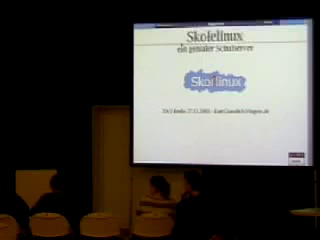 Skolelinux - ein genialer Schulserver Die Eigenschaften von Skolelinux und die Organisation des Projektes werden vorgestellt. Skolelinux ist ein Schulserver auf Debianbasis. Integriert sind Hauptserver, Workstations, Terminalserver und Thinclients. Die wichtigsten Eigenschaften: einfache Installation und vollständig konfiguriertes Netzwerk. Das Projekt sucht Mitarbeiter/-innen.
-
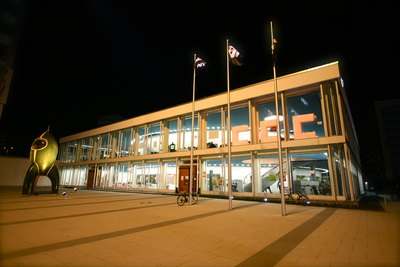 25C3 Photos (Gabe) Chaos Computer Club's 25C3: "Nothing to Hide" @ BCC, Berlin
-
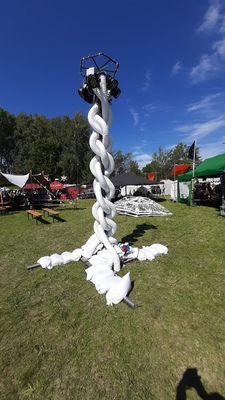 RIP LED Palm Tree “The Chaos West LED Palm Tree after it got hit by rain - delaminating slats - structural failure ”
-
 TCP/IP v6 Einführung IPv6 - den Namen des 'next generation' Internet Protocols hat wohl inzwischen jeder schon einmal gehört. Was sich genau dahinter verbirgt, und wie man bereits heute mit dieser neuen Technologie spielen kann, verrät der Vortrag. Themen: IPv6 - Warum? IPv6 - Aufbau des Protokolls (Header, ...) IPv6 - Unterschiede zu IPv4 IPv6 - Welche Betriebssysteme bieten Unterstützung? IPv6 - Wie bekomme ich Zugang? IPv6 - Ausblick auf das deployment
-
 C Optimizations for the masses Aus dem staunenden Blickwinkel eines Assemblerprogrammierers werden die typischen Alltagsfehler, Zeitverschwendungen und Stylefauxpas des Durschnitts-C-Programmierers an echten Beispielen analysiert und Tips und Tricks zu resourcenschonender Programmierung fuer alle Prozessoren verraten. about this event: http://www.ccc.de/congress/2002/fahrplan/event/500.en.html
-
 Die fünf Pforten der Manipulation Wie treibt ein winziger Fadenwurm eine Süßwassergarnele in den Selbstmord? Was haben Autoverkäufer von den Verhörmethoden des CIA gelernt? Wie schafft man es, dass eine Horde Affen sich plötzlich von Weizen ernährt? Kurz: Wie bringt man jemanden dazu, sich selbst zu schaden und gegen seine eigenen Instinkte zu handeln? Eine Einführung in die Kunst der Manipulation. Mit anschaulichen Beispielen von Adam und Eva über Anne Parillaud, Gammarus lacustris und Mercedes Benz bis hin zu Thomas Gottschalk. about this event: http://www.ccc.de/congress/2002/fahrplan/event/453.en.html
-
 Amateurfunk - Quo Vadis? Amateurfunk - braucht man das im Zeitalter des Internets noch? Wir (Peter, DO1GVT und Michael, DL3KJU) sagen "Ja", und zeigen Euch, was auch heutzutage noch spannendes möglich ist. Amateurfunk ist kreativer Umgang mit Technologie in Reinform! Unsere Themen (u.a.): D-ATV (digitales Amateurfunk-Fernsehen), Funkruf (Pager in Afu-Funkruf-Empfänger umwandeln), PSK31 (digitale Sendeverfahren mit geringen Sendeleistungen), Wireless-LAN im Amateurfunk und andere spannende Themen. Abschließend erzählen wir Euch noch, wie man Funkamateur werden kann, und wie die wichtigsten gesetzlichen Regelungen grob aussehen. Zielgruppe des Vortrags sind vor allem interessierte HackerInnen mit keinen oder nur wenig Vorkenntnissen zum Thema. about this event: http://www.ccc.de/congress/2002/fahrplan/event/508.en.html
-
 Freedom CPU : Year 4 F-CPU is not dead : it is stable since 2000 and some source code exists. The VHDL tool chain problems are slowly solved and new software is written : the goal of designing a microprocessor only with Free Software is not utopic anymore. Some french F-CPU contributors will present a few architectural aspects, some code examples and the available (incomplete) software suite. about this event: http://www.ccc.de/congress/2002/fahrplan/event/498.en.html
-
 EU-Urheberrechtslinie, deutsche Implementierung und Auswirkungen auf die Informationsfreiheit Zwei WIPO-Verträge von 1996 bildeten den Auftakt, um das Urheberrecht auf die Höhe der digitalen Zeiten zu bringen. Der US-amerikanische DMCA von 1998 war ihre erste Umsetzung in nationales Recht. In Europa bildet die Urheberrechtsrichtlinie von 2001 den Rahmen für die Implementierung. Die deutsche Novelle wird voraussichtlich im Februar 2003 verabschiedet. Im Kern der Novellierung steht ein Sonderschutz für "technische Maßnahmen" zur Nutzungskontrolle, besser bekannt als "Digital Restrictions Management". Wie funktioniert dieses Lex DRM und welche Auswirkungen wird es auf die Informationsfreiheiten haben? about this event: http://www.ccc.de/congress/2002/fahrplan/event/479.en.html
-
 How to find anything on the web Session: Web wizard searching techniques, anti-advertisement galore and software reversing tips about this event: http://www.ccc.de/congress/2002/fahrplan/event/443.en.html
-
 Angriffe auf Paddingverfahren zu RSA RSA wird gemeinhin als gut erprobtes und damit sicheres asymetrisches Kryptosystem angesehen und eingesetzt. Allerdings ermöglchen Designfehler im Datenformat PKCS 1 und haufenweise Implementierungsfehler in kommerziellen Produkten unter bestimmten Umständen adaptive, aktive Angriffe, die den Klartext Preis geben. Ziel des Vortrags ist, die Problematik zu erläutern und die Zuhörer für das Thema zu sensibilisieren. Schliesslich ist die Wahl des Paddingverfahrens mitunter genauso kritisch wie die Wahl der Kryptofunktion selbst. Das Forschungsgebiet ist relativ neu, wesentliche Erkenntnisse wurde erst in den vergangenen zwei Jahren publiziert. about this event: http://www.ccc.de/congress/2002/fahrplan/event/463.en.html
-
 Zero Tool Hacking or: Myths about the All-Capable Scanner Tool or: Options and Uses of Utils you have never heard before Hacking used to be an art; one may get the impression that this turned recently in other questions of, say how many toolz you have and which systems you own. Within our presentation we will demonstrate hacking approaches with little or even no tools at all. Given a reasonable number of standard operating system utilities, much information about a network can be obtained and several hacks deem possible. This is no presenation of cutting-edge techniques, most of the approaches have been possible since many years/for a long time. However, we will not explain what TCP/IP means or how to calculate a netmask. Targetetd to an audience that knows what networking is all about but wishes to see more obfruscated means of using well-known utilities. During the hands-on session we will explain and demonstrate how we can draw maps of segments with traceroute, how to identify filtered hosts with ping and arp, how to do IP spoofing and segment invasion with ifconfig or how to get some more reliable information about a webserver. We conclude with a discussion of the feasibility of this approach, identify useful tools that can be of effective help and name those which mainly keep you stupid whilst they do not do any better.
-
 Patent Party Software-Patente bedrohen den gesamten IT-Mittelstand existenziell. Wer proprietäre Software schreibt, kann hoffen, übersehen zu werden. Das ist dann wie Autofahren ohne Sicherheitsgurt: *Meistens* passiert nichts. Wer sich hingegen für Freie Software einsetzt, steht ganz oben auf der Abschußliste. Problem: Bislang hat sich dies alles noch nicht ins Bewußtsein der Öffentlichkeit vorgearbeitet. Lösung: Wir machen eine Party draus. :-) Alle Programmierer sind übrigens bereits jetzt dazu eingeladen, sich an einem Patentverletzungsprogrammierwettbewerb [4] zu beteiligen. Noch ist die Teilnahme übrigens freiwillig. Wenn jedoch Software-Patente in Europa Wirklichkeit werden, nimmt jeder Programmierer automatisch an dem dann stattfindenden atentverletzungsprogrammierwettbewerb teil, ob er will oder nicht. about this event: http://www.ccc.de/congress/2002/fahrplan/event/411.en.html
-
 Forensik: Musterspuren in Schließzylindern Vielen noch unbekannt ist, daß auch beim gewaltfreien öffnen von Schlössern Spuren im Schließzylinder zurückbleiben. Im Rahmen von mehreren Untersuchungen wurden von den Sportsfreunden mittels verschiedener Methoden entsperrte Schlösser polizeitechnisch auf Spuren untersucht.
-
 SCTP (Stream Control Transmission Protocol) The SCTP (Stream Control Transmission Protocol) is a new reliable transfer protocol standardized by the Internet Engineering Task Force (IETF) in the documents [1], [2] and [3]. It was primarily developed by the SIGTRAN group to provide a mechanism for transporting currently circuit switched telephony signaling (SS7) data over packet switched networks. Designed to overcome some deficiencies of TCP, its main benefits are a more flexible, message oriented data delivery to its user, and inherent support for multi-homimng. As such, it is not only a transport protocol for delivery of SS7 signaling data over IP networks, as originally intended. Much rather, it is a general purpose transport protocol, suitable for any kind of message oriented traffic (e.g. Internet file transfer, SCSI over IP, SIP, HTTP, etc.), and thus a successor to TCP. Together with enhancements to the core protocol (as per [4] and [5]), features for mobility of SCTP endpoints and multimedia transmissions can be added to SCTP implementations. So far, major operating systems vendors started integrating SCTP into their protocol stacks, among these Linux, FreeBSD, Solaris, HP-UX, IBM AIX, Cisco IOS, and many more. This presentation will be about the features of the core protocol, and explain the protocol enhancements for transport layer mobility and partial reliability. Security solutions using IPSec or TLS [6] will also be covered. about this event: http://www.ccc.de/congress/2002/fahrplan/event/495.en.html
-
 Jahresrückblick: Netzzensur und andere Ereignisse des Chaos Jahres 2002 In dieser mittlerweile traditionellen Veranstaltung, versuchen die CCC Sprecher die Vorgänge und Themen die den Club in der Aussenkommunikation beschäftigten und die diesbezüglichen Erfahrungen zusammenfassend wiederzugeben. about this event: http://www.ccc.de/congress/2002/fahrplan/event/435.en.html
-
 Eröffnung Auftaktveranstaltung des 19. Chaos Communication Congress. Begrüßung und Information über das Congressprogramm, auf dem Congress aktive Gruppen und sonstige Veranstaltungen und nützliche Informationen rund um den 19C3. about this event: http://www.ccc.de/congress/2002/fahrplan/event/428.en.html
331–360 of 1455